
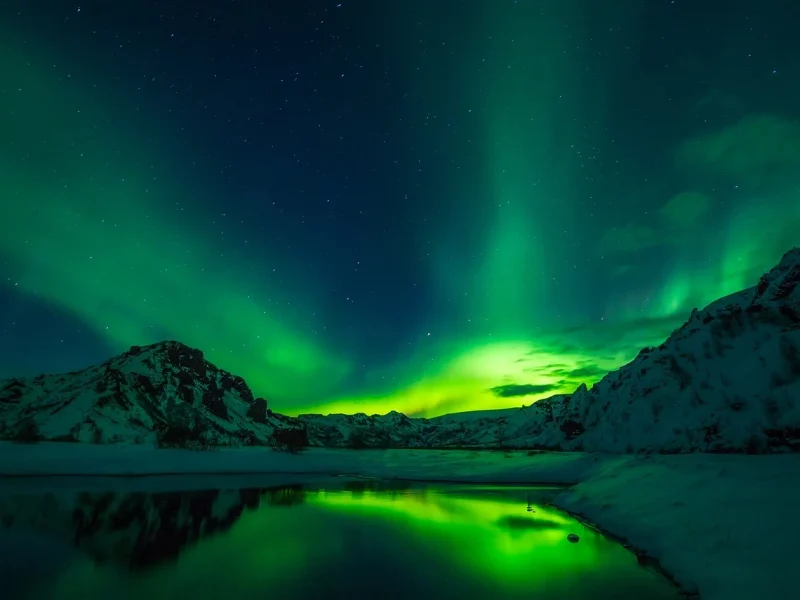
Iceland is a small country with its sights spread a long way apart, and that single fact decides whether a trip works. The Golden Circle sits within a day of Reykjavik. Jökulsárlón is five hours further east. The Westfjords are a detour that costs three days on their own.
This guide covers the places to visit in Iceland by region rather than as a ranked list, so you can see which ones sit near each other, and it ends with the question that actually matters — how many days you need. Vipasha, who runs our Europe desk, plans these routes around the aurora season and the daylight, and both change what is worth doing.
Iceland is inside the Schengen area, so Indian passport holders need a Schengen visa before travelling — our Schengen visa services team handles the application and the appointment slot. For the trip itself, our Iceland tour packages cover the Golden Circle and the South Coast, and the Northern Lights tour packages from India are built around the aurora season specifically.
What are the best places to visit in Iceland?
Iceland’s main sights sit in four clusters: the Golden Circle within a day of Reykjavik, the South Coast waterfalls and black-sand beaches, the glacier lagoon at Jökulsárlón in the southeast, and the Snæfellsnes peninsula to the west.
Almost every Iceland itinerary is built from those four, in that order, because that is the order the Ring Road puts them in. The north — Akureyri, Lake Mývatn, Dettifoss — only comes into range on a trip of eight days or more, and the Westfjords need their own.
Two things about the country that catch people out. There are no direct flights from India, so every route connects through Europe — Frankfurt, Paris, Amsterdam, London, Copenhagen or Helsinki — and that connection is worth choosing carefully, because a bad one adds a day at each end. And the highland F-roads are only open in summer, roughly late June to early September, and need a 4×4. A winter trip and a summer trip in Iceland are close to two different countries.
Where can you see the Northern Lights in Iceland?
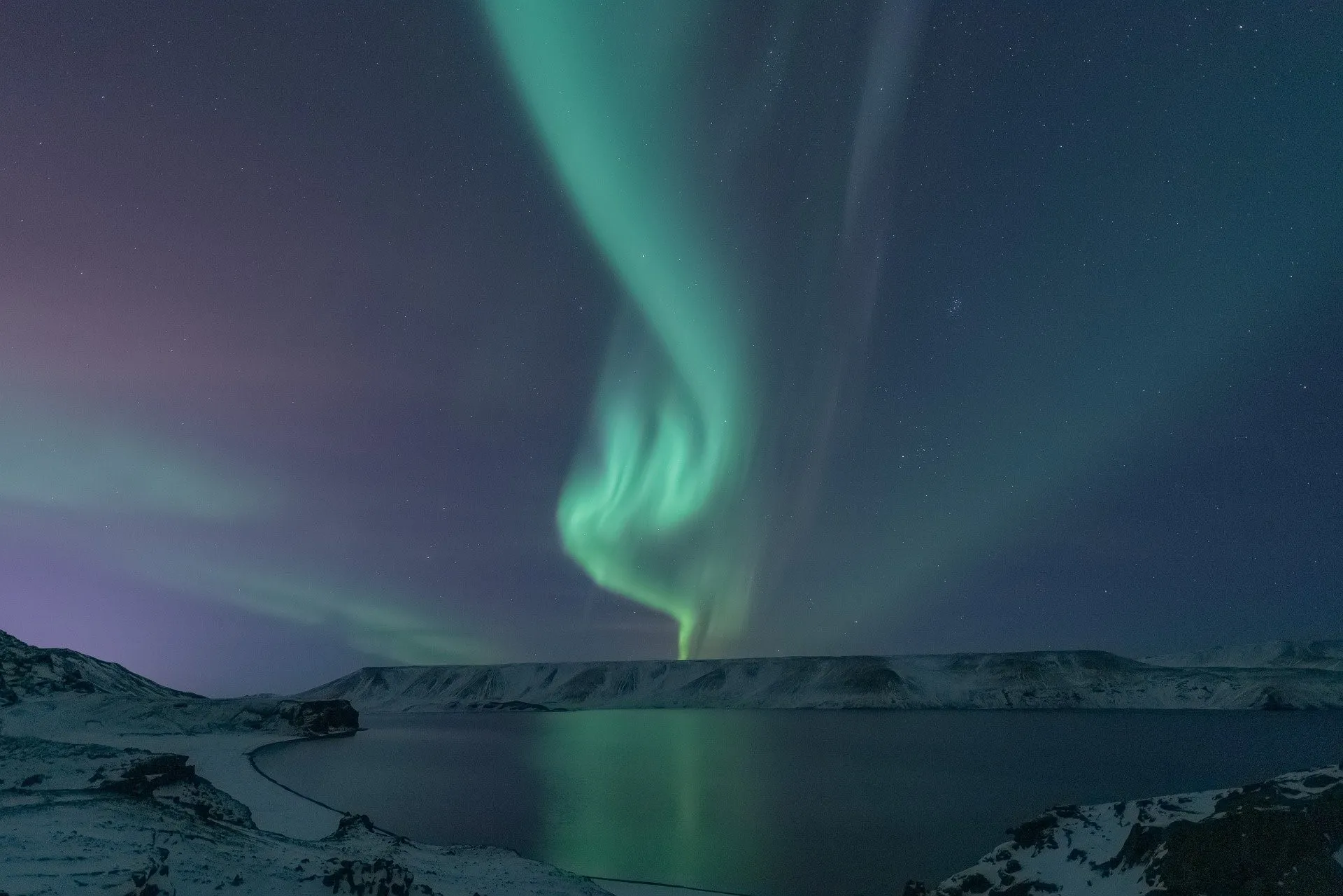
You can see the Northern Lights anywhere in Iceland between roughly September and April, as long as you get away from town lights and the sky is clear.
Iceland sits right under the auroral oval, so latitude is not the constraint here the way it is further south in Europe. The constraints are darkness and cloud. That rules out May to August entirely, when the midnight sun means the sky never gets dark, and it makes the weather forecast more useful than any aurora forecast on a given night.
What that means practically: stay outside Reykjavik on at least two nights, and treat the aurora as something you give several chances rather than one. A single booked “Northern Lights tour” on a cloudy night is how most people miss them. Our Northern Lights routes build in more than one night for exactly this reason.
The Icelandic Met Office publishes the aurora forecast and the cloud-cover map together at vedur.is, which is the only forecast worth checking the afternoon before.
What is there to see on the Golden Circle?
The Golden Circle is three stops within a day’s drive of Reykjavik: Thingvellir National Park, the Geysir geothermal area, and Gullfoss waterfall.
Thingvellir is where the Icelandic parliament, the Alþingi, was founded in 930 AD, and where the North American and Eurasian plates are visibly pulling apart — you walk down a rift between two continents. It is a UNESCO World Heritage Site on both counts, cultural and geological. The Silfra fissure here is the snorkelling and diving site, in glacial meltwater clear enough to see a hundred metres.
Geysir gives its name to every geyser in the world, though the original one is mostly dormant now. The one that performs is Strokkur, next to it, which goes off every five to ten minutes — so you will not wait long.
Gullfoss is a two-tier waterfall on the Hvítá river, dropping into a canyon. In winter the spray freezes across the viewing path, which is worth knowing before you wear the wrong shoes.
The whole loop is a comfortable day from Reykjavik, and it is the one part of Iceland you can see properly without committing to a long drive.
What can you see along Iceland’s South Coast?
Iceland’s South Coast runs from Seljalandsfoss and Skógafoss past the black sand at Reynisfjara to the village of Vík, and it is the single best day’s driving in the country.
Seljalandsfoss is the waterfall you can walk behind, on a path that loops around the back of the curtain of water. You will get wet. Skógafoss, twenty minutes further on, is a sixty-metre drop you can stand right in front of, with a staircase up the side to a viewpoint at the top.
Reynisfjara, near Vík, is the black-sand beach with the basalt columns and the Reynisdrangar sea stacks offshore. It is also genuinely dangerous. The sneaker waves here run much further up the sand than they look like they will, the water is freezing, and people have been killed. Stay well back from the waterline and never turn your back on the sea — this is the one safety line in this guide that is not a formality.
Fjaðrárgljúfur canyon and the Sólheimasandur plane wreck are the two optional stops on the same stretch. The plane wreck is about a four-kilometre walk each way from the car park across flat black sand, with no shade and no shelter — worth it if the weather is kind, a bad idea if it is not.
Planning an Iceland trip and not sure how to fit it together? Message our Europe desk on WhatsApp at +91 6300303169 and ask for Vipasha. Tell us your dates, how many are travelling, and whether the aurora is the point of the trip — that one answer changes the whole route.
What is Jökulsárlón Glacier Lagoon?
Jökulsárlón is a lagoon at the foot of a glacier in southeast Iceland where icebergs break off and drift out to sea, and Diamond Beach opposite is where they wash back up onto black sand.
The ice comes off Breiðamerkurjökull, an outlet of the Vatnajökull ice cap. Boat trips run among the icebergs in summer; in winter the lagoon is quieter and the ice is often more dramatic. Diamond Beach, directly across the road, is where the blocks that made it out to sea return and sit on the black sand like glass — it is the more photographed of the two and takes ten minutes to reach.
Jökulsárlón is about five hours east of Reykjavik, and that distance is the single biggest planning decision on an Iceland trip. Doing it as a day trip means ten hours in a car. Stay a night in Höfn or Vík instead, and it becomes the best day of the holiday rather than the most exhausting.
Which national parks should you visit in Iceland?
Two: Thingvellir, on the Golden Circle, and Vatnajökull in the southeast, which holds Europe’s largest glacier by volume and the winter ice caves.
Vatnajökull National Park covers roughly a seventh of the country. The part most visitors see is the southern edge — Jökulsárlón, Skaftafell, and the ice caves under the glacier. The ice caves are a winter feature, roughly November to March, because they are not stable in the summer melt. Every cave visit goes with a licensed guide; this is not somewhere to walk in alone.
Snæfellsjökull National Park, on the peninsula, is the third and the smallest — the glacier-topped volcano Jules Verne used as the entrance to the centre of the earth.
What are the best waterfalls in Iceland?
Gullfoss on the Golden Circle, Seljalandsfoss and Skógafoss on the South Coast, and Dettifoss in the north are the four that most itineraries include.
Dettifoss is the outlier, and the reason is distance — it is in the northeast, reachable only on a Ring Road trip of eight days or more. It is one of the most powerful waterfalls in Europe by volume of water, and it feels it.
Goðafoss, also in the north between Akureyri and Mývatn, is the one people stop at without planning to. Svartifoss in Skaftafell is smaller and falls over black basalt columns, and it is a short uphill walk rather than a roadside stop.
If you only have the southwest, Gullfoss, Seljalandsfoss and Skógafoss are three of Iceland’s best and they are all within a day of each other.
Is the Blue Lagoon worth visiting?
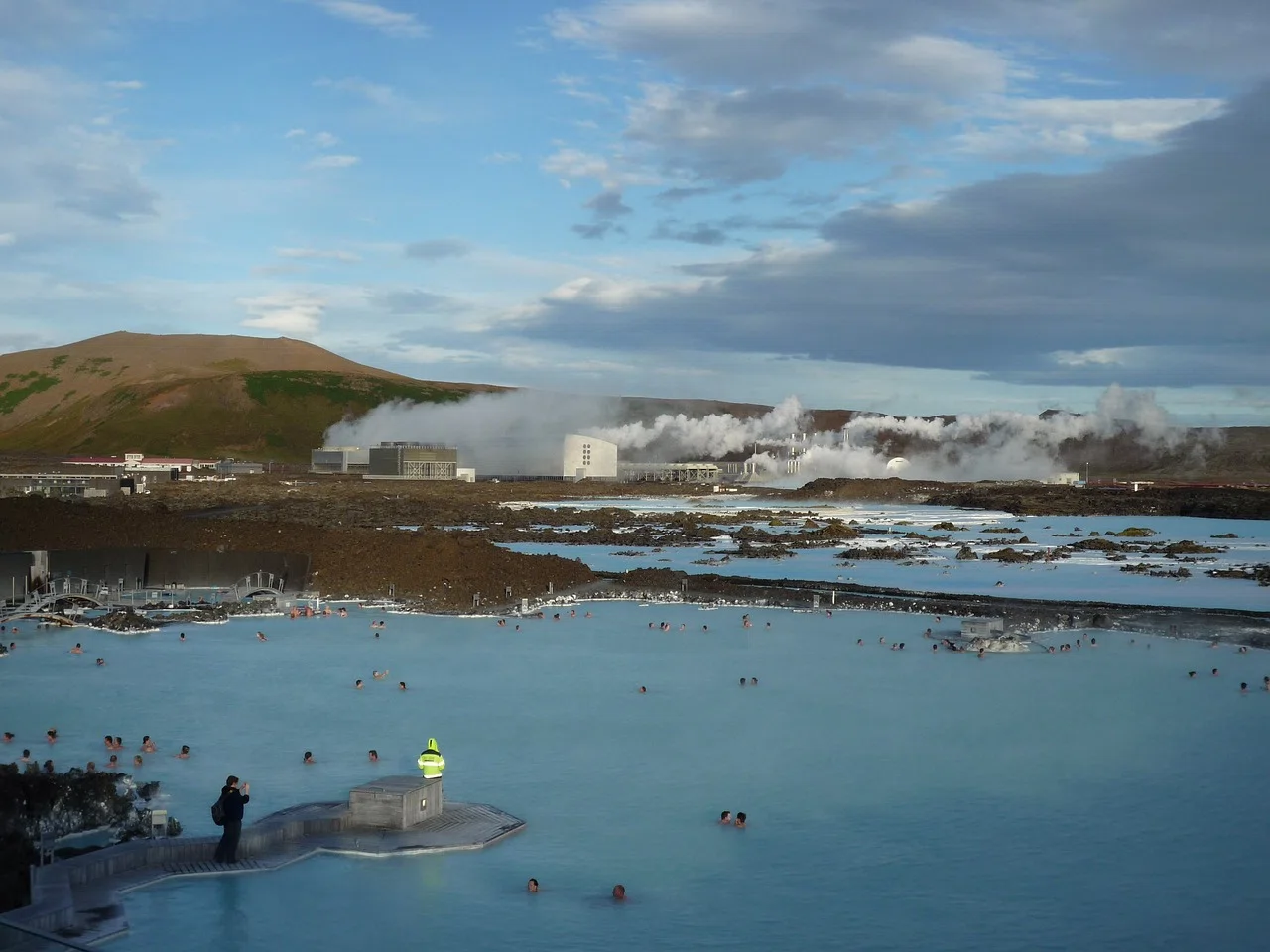
The Blue Lagoon is worth doing once, and it has to be booked well ahead — but it is the most expensive stop on most Iceland trips, and it is not the only geothermal pool.
It sits close to Keflavík airport, which makes it easy to fit on the way in or the way out rather than spending a Reykjavik day on it. Entry is timed and it sells out; you cannot turn up.
Two honest caveats. It has closed at short notice during volcanic activity on the Reykjanes peninsula, so check it is open before you build a day around it. And Sky Lagoon in Reykjavik and the Secret Lagoon on the Golden Circle are both cheaper, quieter and, for a lot of our travellers, the better experience. Every Icelandic town also has a municipal geothermal pool that locals actually use, for a fraction of the price.
What can you see on the Snæfellsnes Peninsula?
Snæfellsnes is a day’s loop west of Reykjavik holding Kirkjufell mountain, black-sand beaches and a glacier-topped volcano, and it works as a short version of Iceland in one drive.
Kirkjufell, with the small Kirkjufellsfoss waterfall in front of it, is the most photographed mountain in the country. Snæfellsjökull is the glacier and volcano at the tip. Between them are the fishing villages of Arnarstapi and Hellnar, the Djúpalónssandur black pebble beach with its shipwreck remains, and the basalt cliffs at Lóndrangar.
If your trip is short and you cannot reach the east, Snæfellsnes is the better second day than pushing further along the South Coast — you get glacier, coast, cliffs and villages in one loop and sleep in Reykjavik.
Where can you go whale watching and see puffins?
Húsavík in the north is Iceland’s whale-watching town, Reykjavik’s old harbour runs shorter trips, and the puffin colonies are on Heimaey and around Dyrhólaey between roughly May and August.
Húsavík has the higher success rate and the longer trips, but it is only reachable on a Ring Road itinerary. Reykjavik harbour trips are two to three hours and fit into a spare afternoon — minke whales and dolphins are the usual sightings, humpbacks in summer.
Puffins are seasonal and strictly so. They come ashore to breed from roughly May to August and are out at sea the rest of the year, so a winter aurora trip will not see one. Heimaey, in the Westman Islands, holds one of the largest colonies in the world and is reached by a short ferry from Landeyjahöfn — the island was half-buried by the 1973 Eldfell eruption, and you can walk up the still-warm volcano that did it.
What is there to see in and around Reykjavik?
Reykjavik itself is small enough to walk in a morning — Hallgrímskirkja, the harbour and the National Museum of Iceland — with the Raufarhólshellir lava tunnel a short drive out of town.
Hallgrímskirkja, the concrete church on the hill, has a lift up the tower for the best view over the coloured roofs. Harpa, the glass concert hall on the water, and the Sun Voyager sculpture along the shore path are both a few minutes from it. The National Museum of Iceland is the one that explains how the country was settled, and Perlan has a good glacier exhibition with an indoor ice cave.
Raufarhólshellir is a lava tunnel about half an hour from the city that you walk through underground with a guide — a genuinely different hour and a good option on a day the weather closes in.
One practical note for Indian travellers: Reykjavik is where the vegetarian and Indian food is. There are Indian restaurants in the city and most cafés will do something vegetarian. Outside it, in the villages and along the Ring Road, the options thin out fast. If that matters for your group, plan the meals around it or carry supplies from the city.
Is the Westfjords region worth visiting?
The Westfjords are worth it only if you have ten days or more, because the roads are slow and the region is a long detour from the Ring Road.
What is there is exceptional — Dynjandi, a waterfall that fans down a mountainside in tiers, the bird cliffs at Látrabjarg, and the Hornstrandir reserve, which has no roads at all and is reached by boat. Almost no tour groups go, and that is the point of it.
But it is a genuine trade. Adding the Westfjords to a Ring Road route turns a ten-day itinerary into a fortnight. On a first trip to Iceland, we would rather you saw the south properly.
How many days do you need in Iceland?
Five days covers Reykjavik, the Golden Circle and the South Coast. The full Ring Road needs eight to ten.
The mistake we see most often on a first Iceland trip is booking six days and planning the Ring Road anyway. It is about 1,300 km of road and it is not a motorway — you end up driving past the things you came to see. If you have under a week, stay in the southwest and see it properly.
| Days | Route | Reaches |
|---|---|---|
| 5 | Reykjavik → Golden Circle → South Coast to Vík → Jökulsárlón → back | Southwest and southeast |
| 7 | The above, plus Snæfellsnes, or a second night in the southeast | Southwest, southeast, west |
| 10 | The full Ring Road — north via Akureyri, Lake Mývatn and Dettifoss | The whole country except the Westfjords |
| 14 | Ring Road plus the Westfjords | Everything |
Iceland tours that cover these places
- Gracious Southwest Iceland, 7 days — Golden Circle, South Coast, Into the Glacier and the Blue Lagoon, in first-class hotels, year-round.
- Iceland Circle & Northern Lights, 8 days — the full Ring Road with Mývatn, Jökulsárlón and five aurora evenings (Sep–Apr).
- Grand Tour of Iceland, 12 days — the whole island plus Snæfellsnes and the Westfjords, May–August.
- Land of Northern Lights, 5 days — Reykjavík, the South Coast and the Golden Circle in a short winter break.
Compare every route on our Iceland tour packages from India page.
Two seasonal notes that change the plan more than anything else.
The aurora season and the midnight sun do not overlap. September to April gives you dark skies and a real chance of the Northern Lights. May to August gives you near-continuous daylight, open highland roads and puffins, and no aurora at all. Decide which trip you are taking before you pick dates.
The ice caves are a winter thing, roughly November to March. So is the cheaper accommodation. So are the closed mountain roads.
FAQs on Places to visit in Iceland
What are the best places to visit in Iceland?
The Golden Circle (Thingvellir, Geysir and Gullfoss), the South Coast waterfalls and Reynisfjara black-sand beach, Jökulsárlón glacier lagoon, the Snæfellsnes peninsula, and Reykjavik itself.
Where should I go in Iceland on a first trip?
Stay in the southwest. Reykjavik, the Golden Circle, the South Coast to Vík and Jökulsárlón fill five days comfortably and cover Iceland’s best-known sights without a long drive every day.
How many days do you need in Iceland?
Five for the southwest, seven to add Snæfellsnes, eight to ten for the full Ring Road, and about fourteen if you want the Westfjords as well.
What is the best time to visit Iceland for the Northern Lights?
September to April, because the sky needs to be dark. May to August has the midnight sun and no aurora at all.
Do Indians need a visa for Iceland?
Yes. Iceland is in the Schengen area, so Indian passport holders need a Schengen visa. There are no direct flights from India either, so every route connects through Europe.
Is the Blue Lagoon worth it?
Once, and book it well in advance. It is the most expensive stop on most Iceland trips, and Sky Lagoon in Reykjavik and the Secret Lagoon on the Golden Circle are cheaper, quieter alternatives.
Can you drive the Ring Road in winter?
Yes, but slowly, and with a 4×4 and daily road-condition checks. The highland F-roads are shut. If the Ring Road is the goal, summer is easier; if the aurora is the goal, winter is the only option.
When can you see puffins in Iceland?
Roughly May to August, when they come ashore to breed. Heimaey in the Westman Islands and Dyrhólaey on the South Coast are the easiest colonies to reach.
Planning a trip to Iceland? Send us your travel dates, how many are travelling, and whether the Northern Lights are the point of the trip or a bonus — that answer decides the season, the route and the number of nights outside Reykjavik. Vipasha on our Europe desk will build the itinerary around it. WhatsApp at +91 6300303169, or see our Iceland tour packages and Northern Lights tour packages from India.
Last verified: 29 August 2026. Road conditions, Blue Lagoon opening and ice-cave access change with the season and with volcanic activity. Confirm current status before you travel.