
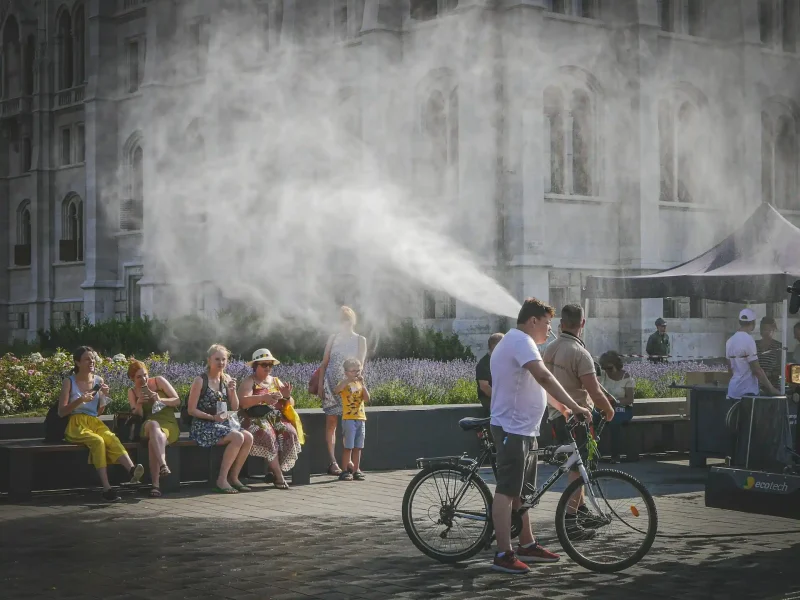
Europe is having its hottest summer in living memory, and if you are travelling there in the next few weeks — or deciding whether to book at all — it is worth knowing exactly what is happening before you lock in dates. The short version: a Europe trip in 2026 is still very doable, but the heat is genuinely shortening opening hours at some landmarks and disrupting travel in parts of southern Europe. Planning around it is easy once you know where the heat actually is.
This post does two things. First, it pulls the latest heatwave news into one place, country by country, with a source link on every line — so you don’t have to hunt across ten different sites to find out whether your destination is affected. Every item below is dated within the past week (as of 13 July 2026). Second, it lays out the practical fixes — timing, destination swaps, packing and daily rhythm — that keep a Europe trip comfortable instead of exhausting.
A note on tone before we start: this is a serious heatwave, and authorities have linked it to a significant loss of life across the continent. We have kept the reporting factual and focused on helping you plan safely, not on alarm.
Is it safe to travel to Europe right now?
Yes, with sensible planning — travel to Europe has not been cancelled, and most cities are operating normally. What has changed is that national health authorities and the World Health Organization are urging visitors to avoid outdoor activity during peak afternoon hours, stay hydrated, and keep an eye on local alerts. On 7 July 2026 the WHO’s Europe office warned that “more deadly weeks may still lie ahead” and that older travellers are most at risk (WHO Europe, 7 Jul 2026). The practical takeaway is not “stay home” — it is “plan your days around the heat and avoid fire-affected areas.”
Latest Europe heatwave news — country by country (past 7 days)
Here is the consolidated picture as of 13 July 2026, one line per item, each with its source. Skim for your destination.
France
- Paris landmarks cut hours: the Eiffel Tower closed early at 4pm on Saturday 11 and Sunday 12 July — almost nine hours before its usual late close — while the Louvre held a 4pm close and the Musée d’Orsay is shutting at 5pm from 11–15 July (Euronews, 11 Jul 2026).
- In the French Pyrenees, a fast-spreading wildfire near Perpignan forced around 10,000 people to evacuate and scorched more than 4,600 hectares, and Tour de France organisers banned spectators from part of Stage 3 (RTÉ, 6 Jul 2026).
Spain
- Barcelona hit 40.5°C on 8 July — its highest reading in 112 years of records, and the national weather agency AEMET warned some Spanish stations could exceed 44°C this week (Euronews, 8 Jul 2026).
- A wildfire near the Costa Brava coast burned more than 2,200 hectares in two days, with firefighters warning of “complicated” conditions as temperatures rose (Euronews, 6 Jul 2026).
Portugal
- More than 1,200 firefighters have been battling a major blaze in Vouzela, central Portugal, with roughly 12,000 hectares scorched; authorities strengthened operations with EU support (Euronews, 6 Jul 2026).
Greece
- Wildfires near Thessaloniki forced evacuations of several suburbs and a facility housing 157 people, and authorities warned households about toxic smoke (Euronews, 6 Jul 2026). Greek authorities have also closed the Acropolis during peak afternoon heat in previous heatwaves, so check opening hours the day before you visit.
Italy and the Balkans
- Italy and the Balkans stayed hot into mid-July, with the heat dome easing in the west but lingering further south and east as southern Europe kept battling heat and fires through the week (PBS News, w/c 6 Jul 2026).
Turkey
- Turkey evacuated tens of thousands as fires threatened Bursa and other areas, with wind and extreme heat driving fresh blazes across the country (PBS News, w/c 6 Jul 2026).
The continent overall
- A fresh heat dome reloaded over Western Europe in mid-July, with active wildfires reported across Spain, Portugal, France and Greece through the week (Euronews, 6 Jul 2026). The human cost has been heavy, and health authorities continue to urge caution, especially for older travellers (WHO Europe, 7 Jul 2026).
If your itinerary runs through southern France, Iberia, Greece or the Aegean islands this month, the two things worth doing today are (1) checking your specific attractions’ opening hours the day before, and (2) confirming you are not routing through an active fire zone.
How the heat is actually affecting itineraries
The heat affects trips in three concrete ways, and all three are manageable. First, shorter visiting windows at big-name attractions — as the Paris closures show, a landmark you booked for the afternoon may shut early, so a timed morning slot is safer. Second, transport hiccups — heat can warp rail tracks and strain power lines, and storms have caused knock-on flight delays, so build in buffer time around tight connections. Third, outdoor comfort — walking tours, open-air sites and long queues are simply harder between roughly 11am and 5pm.
None of this means a bad trip. It means front-loading your outdoor sightseeing into the morning, parking the hottest hours indoors, and keeping bookings flexible. More on the exact daily rhythm below.
Should you cancel, or just travel smarter (and maybe later)?
For most travellers the better move is not to cancel but to shift the timing or the region, and here is the reasoning. The heat is heavily concentrated in the south — Iberia, southern France, Italy and Greece — while much of northern and Alpine Europe stays comfortable. And the calendar helps you: September and October in Europe are cooler, less crowded, and usually cheaper on flights, which is why “travel later this year” is often the smartest single change you can make.
If your dates are fixed for now, you have two good levers: swap to a cooler destination, or restructure your days. If your dates are flexible, autumn is the easy win.
Cooler Europe destinations to consider (“coolcations”)
If you want Europe without the extreme heat, point north and up. Cooler, reliably comfortable options this summer include Iceland (average summer temperatures around 12°C), Scotland (around 16°C), Norway, Finland, Switzerland, Austria, Slovenia and Germany’s Black Forest. These “coolcation” regions have become the standout trend of 2026 precisely because they sidestep the southern heat while still delivering classic European scenery, lakes, mountains and walkable cities.
A practical middle path: keep one or two southern highlights but base the bulk of the trip somewhere cooler — for example, pair a short Rome or Barcelona city break with a longer Alpine or Nordic leg, rather than spending ten straight days in the hottest zones.
A heat-smart Europe itinerary: timing, packing and daily rhythm
The single most effective change is to rebuild each day around the heat curve: outdoors early, indoors midday, out again in the evening. Concretely:
- Sightsee before 11am. Do your walking tours, viewpoints and open-air sites first thing, when it is coolest and queues are shortest. Pre-book timed entries so an early-closing day doesn’t cost you the visit.
- Spend the hottest hours indoors. Museums, galleries, churches, shopping arcades and even train stations are usually air-conditioned or naturally cool — plan the 12–5pm block around them.
- Save streets and gardens for the evening. European summer evenings are long and pleasant; that’s your time for strolls, dinners and riverside walks.
- Pack for heat: light breathable clothing, a refillable water bottle, high-SPF sunscreen, a hat, sunglasses and electrolyte sachets. A small hand fan and a cooling towel go a long way.
- Build in buffers. Leave extra time around rail and flight connections, and prefer refundable or flexible bookings while conditions are volatile.
- Check alerts daily. Follow local red/amber heat warnings and national civil-protection updates, keep to the WHO’s heat-health guidance, and avoid woodland and mountain areas flagged for wildfire risk.
For travellers coming from India
If you are planning Europe from India, the heat overlaps with a second, unrelated pressure: Schengen visa appointment slots have been extremely tight for summer 2026, with popular consulates booked out weeks ahead. That actually strengthens the case for an autumn trip — cooler weather and easier visa availability line up in your favour. Practical points for Indian passport holders: apply through the country where you’ll spend the most nights, consider faster-processing consulates, and give yourself a long lead time. For the current appointment picture and workarounds, see our companion guide on Schengen appointment slots this summer, and the broader 2026 visa changes for Indian travellers.
If you’d rather not manage weather-proofing, routing and visas yourself, this is exactly the kind of trip our team plans around the seasons and regions that stay comfortable. Explore our Europe tour packages or message us on WhatsApp at +91 63003 03169 and we’ll shape an itinerary — cooler-region or autumn-dated — around your group.
Frequently asked questions
Is it safe to travel to Europe during the 2026 heatwave?
Yes, with planning. Cities are operating and travel is not cancelled, but health authorities urge visitors to avoid outdoor activity in peak afternoon hours, stay hydrated and monitor local alerts. Avoid regions with active wildfires, mainly in parts of Spain, Portugal, Greece and southern France as of mid-July 2026.
Which European attractions have cut their hours because of the heat?
Paris landmarks have been most visibly affected — the Eiffel Tower closed early at 4pm on 11–12 July 2026, the Louvre held a 4pm close, and the Musée d’Orsay is closing at 5pm from 11–15 July. Greece closes the Acropolis during peak afternoon heat on extreme days. Always check your specific attraction’s hours the day before.
When is the best time to visit Europe in 2026 to avoid the heat?
September and October are the sweet spot — noticeably cooler than midsummer, less crowded, and often cheaper on flights. For summer travel, northern and Alpine Europe (Iceland, Scotland, Norway, Switzerland, Austria) stays far more comfortable than the south.
Should I cancel my Europe trip?
Usually no. Shifting your dates to autumn or swapping the hottest southern legs for cooler regions solves most of the problem. Keep bookings flexible while conditions remain changeable.
Which parts of Europe are still cool right now?
Northern and Alpine Europe — Iceland, Scotland, Norway, Finland, Switzerland, Austria, Slovenia and Germany’s Black Forest — have escaped the worst of the heat and make strong “coolcation” bases.
Last updated 13 July 2026. Conditions during a heatwave change quickly — always confirm attraction hours, transport status and wildfire/weather alerts from official sources close to your travel date. Reviewed by the IMAD Travel team.