
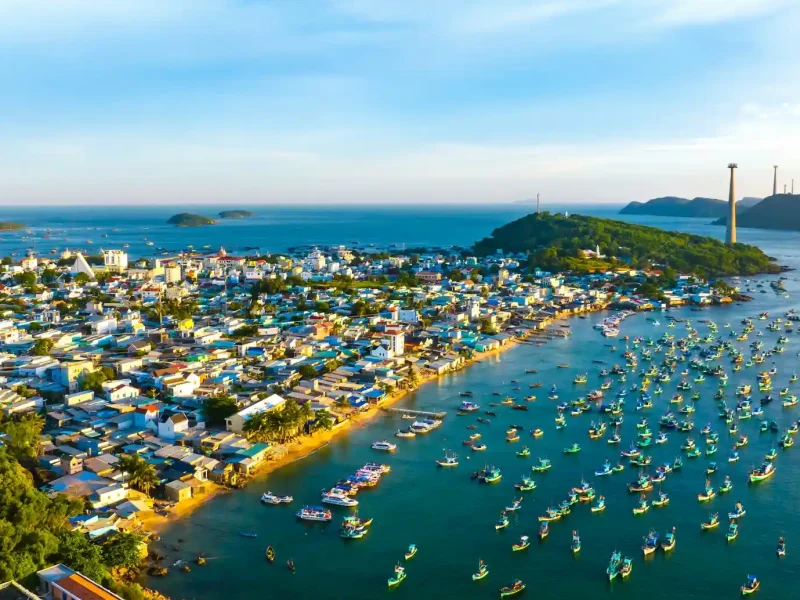
Indian arrivals to Vietnam jumped around 70% in early 2026. Here’s what’s driving the shift, how Vietnam and Thailand compare for Indian travellers, and what a trip actually costs from India.
Vietnam is having a breakout year with Indian travellers, and the numbers tell the story better than any opinion can. In the first two months of 2026, Indian arrivals to Vietnam rose about 70% year on year, reaching roughly 158,000 visitors. That is not a small seasonal bump. It is a genuine shift in where Indian families, honeymooners and first-time Southeast Asia travellers are choosing to spend their holiday. This guide compares Vietnam vs Thailand for Indian travellers across visa, cost, flights and experiences, spotlights the Phú Quốc island that everyone is suddenly talking about, and lays out real itinerary combinations and package prices from India.
To be clear up front: this is not a case of one destination winning and the other losing. Thailand remains one of the most loved, well-connected and family-friendly destinations for Indians, and it will stay on our recommendation list for years. What has changed in 2026 is the momentum, and a few practical reasons are driving it. Let us walk through them.
If you already know Vietnam is where you want to go, our Vietnam tour packages from India can be built around any departure city. Prefer to read first? Keep going.
Why is Vietnam suddenly so popular with Indian travellers in 2026?
There is also a visa factor. From 15 September 2026 Thailand cut its visa exemption for Indians from 60 days to 30, while Vietnam’s e-visa stayed unchanged at up to 90 days. For longer Southeast Asia trips that gap now matters. That uncertainty, even though it proved temporary, nudged many planning families to look at alternatives during the disruption. Vietnam, with its steady, unchanged e-visa and expanding flight connectivity, was the consistent option, and it was ready to receive them. For where it stands today, read our guide to the Thailand visa for Indians.
None of this makes Thailand a poor choice. It means Indian travellers now have two excellent Southeast Asia options, and Vietnam has closed the familiarity gap fast.
Vietnam vs Thailand: the 2026 comparison for Indian travellers
Here is the side-by-side that matters most for an Indian passport holder planning a 2026 trip. Use it as a starting point, then match it to your own travel style.
| Factor | Vietnam (2026) | Thailand (2026) |
|---|---|---|
| Visa for Indians | e-Visa around USD 25 single-entry, valid up to 90 days, roughly 3 working days to process | Visa-free again for up to 30 days (restored 14 Jul 2026 after an interim Visa-on-Arrival phase); free TDAC digital arrival card still mandatory |
| Value for money | Daily costs typically 40–60% lower than several SE Asian peers | Higher on average, though still competitive |
| Direct flights from India | Delhi, Mumbai, Bengaluru, Kolkata and Hyderabad to Hanoi and Ho Chi Minh City on Vietnam Airlines, VietJet and IndiGo, about 5 hours | Extensive and frequent from most Indian metros |
| Return airfare (economy) | Roughly ₹18,000–40,000 depending on city and season | Broadly comparable |
| Signature draw | New-generation attractions: Phú Quốc, Bà Nà Hills, Ha Long Bay | Beaches, nightlife, islands, mature tourism infrastructure |
| 2026 momentum | Indian arrivals up around 70% early 2026 | Steady, still a top-three Indian favourite |
The honest verdict by traveller type: Vietnam is a strong pick for families and first-timers who want variety (mountains, bays, cities and beaches in one trip) at excellent value. Thailand still shines for travellers who want established beach-resort ease, vibrant nightlife, and the shortest possible planning effort. Many of our clients now do both across two years, and some combine a short Vietnam leg with a beach finish.
Phú Quốc: the "new city" hook everyone is asking about
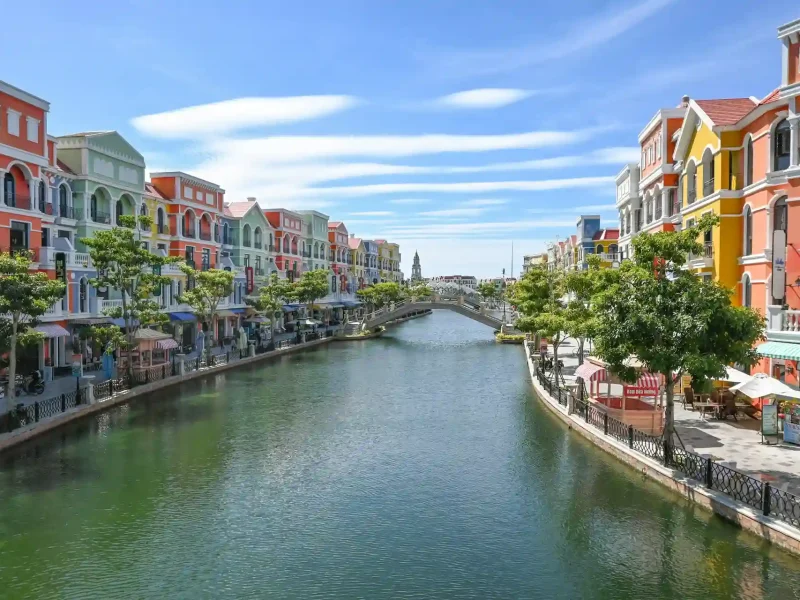
Phú Quốc is the single biggest reason Vietnam feels new again for Indian travellers. This island off Vietnam’s southern coast has quietly become a purpose-built holiday hub, and its “Europe-in-Asia plus theme-park” mix is exactly what Indian families are searching for right now.
Two attractions are doing most of the talking. Grand World Phú Quốc features a Venice-inspired canal about 400 metres long, complete with gondola rides and a “Charm of Venice” show, so you get that European-postcard feel without a Schengen visa. Right next door, VinWonders Phú Quốc is currently the largest theme park in Vietnam, spread across roughly 50 hectares with multiple themed zones, which makes it the closest thing Southeast Asia offers to a Disney-style day out for kids and grandparents alike. Add Vinpearl Safari and the Sun World Hòn Thơm cable car, one of the world’s longest sea-crossing cable cars, and you have two to three easy, high-impact days for a multi-generational group.
The nearest airport is Phú Quốc International Airport (PQC), and the island works beautifully as a beach-and-fun finale after a mainland tour. But the way you fly there changes your visa situation completely, so read the next section carefully before you book.
Phú Quốc visa for Indians: the rule that trips people up
Here is the part most blogs get wrong, and where booking through an IATA-certified agent genuinely protects you. Phú Quốc offers Indian passport holders a 30-day visa exemption, but only under strict conditions confirmed after Vietnam updated its rules in April 2026:
- You must arrive on a direct, nonstop international flight to Phú Quốc, stay only on the island, and depart directly from Phú Quốc to another country.
- Your passport must be valid for at least 6 months, and you should carry proof of onward or return travel. A confirmed return ticket and hotel booking are the standard proofs asked at entry.
- If your journey includes any mainland layover in Hanoi or Ho Chi Minh City, you need a Vietnam e-visa, even for a short connection, because immigration is usually checked on the mainland.
In practice, there are very few regular direct India-to-Phú Quốc flights right now, so most Indian travellers reach the island via Ho Chi Minh City or Hanoi with a domestic hop. That connection means the visa-free route does not apply, and you should plan on the standard USD 25 e-visa. This is precisely the kind of detail our Asia desk confirms for every Phú Quốc booking, so no one is surprised at the airport. You can start that check on our Vietnam visa assistance for Indian passport holders page, or message us and we will map your exact route.
Fact to verify at booking: your specific flight routing and whether any mainland transit is involved, since this decides visa-free eligibility.
Vietnam itinerary combinations from India, and the nearest airports
Vietnam rewards travellers who cluster their days by region, because the country is long and its highlights sit in four distinct zones. Here are the combinations we build most often for Indian groups, each with its gateway airport.
North loop (culture and scenery): Hanoi, Ha Long Bay, Ninh Binh and Sapa. Gateway airport: Hanoi (HAN). Best for first-timers who want the iconic Ha Long Bay overnight cruise and cool-weather landscapes.
Central Vietnam (heritage and photo-stops): Da Nang, Hoi An and Bà Nà Hills with the famous Golden Bridge. Gateway airport: Da Nang (DAD). Best for families who want beach mornings and lantern-lit Hoi An evenings.
South (city and delta): Ho Chi Minh City, the Cu Chi Tunnels and the Mekong Delta. Gateway airport: Ho Chi Minh City (SGN). Best for a lively urban start with history and river life.
Island finale (beach and fun): Phú Quốc, two to three nights. Gateway airport: Phú Quốc (PQC). Best as a relaxing end to a busy tour, especially for kids and grandparents.
Typical itinerary combos + nearest airports
- North loop: Hanoi → Ha Long Bay → Ninh Binh → Sapa (airport: Hanoi HAN)
- Central: Da Nang → Hoi An → Bà Nà Hills / Golden Bridge (airport: Da Nang DAD)
- South: Ho Chi Minh City → Cu Chi Tunnels → Mekong Delta (airport: HCMC SGN)
- Island add-on: Phú Quốc, 2–3 nights (airport: PQC)
- Classic Indian package: Hanoi–Ha Long–Da Nang–Hoi An–Ho Chi Minh (6–8 nights), with Phú Quốc as a honeymoon/family beach extension.
The classic Indian favourite combines Hanoi, Ha Long Bay, Da Nang, Hoi An and Ho Chi Minh City across 6 to 8 nights, with Phú Quốc added as a honeymoon or family extension. Couples often swap the northern trekking days for extra beach time. We can shape any of these around your departure city and dates, whether you fly from Delhi, Mumbai, Hyderabad, Bengaluru, Chennai, Kolkata or Ahmedabad.
How much does a Vietnam trip cost from India in 2026?
A Vietnam holiday from India is one of the best value international trips available in 2026, which is a big part of the current trend. As a planning guide, per-person prices on a twin-sharing basis generally look like this:
- Value/land-only, 4–6 days: from around ₹26,000–35,000 per person, covering hotels, transfers and core sightseeing.
- Mid-range, 6 nights: roughly ₹27,000–65,000 per person, typically including a Ha Long Bay cruise, city tours and select meals.
- Premium to luxury, 6–16 days: about ₹50,000 to ₹1,60,000 per person, with higher hotel categories and Phú Quốc included.
- Flights: add roughly ₹18,000–40,000 return, with low-cost carriers occasionally dropping below ₹20,000 on sales.
Because the biggest swing factors are hotel category, season and departure city, we quote live rather than from a fixed brochure. Tell us your group size and month, and we will build a costed itinerary so you can compare like for like. Prices above are indicative and should be confirmed at the time of booking.
Vietnam or Thailand: which should you pick?
Pick Vietnam in 2026 if you want maximum variety and value in one trip, a simple e-visa, and fresh attractions like Phú Quốc and Bà Nà Hills that the whole family will remember. Pick Thailand if you want mature beach-resort comfort, lively nightlife, and the easiest possible planning, made simpler again by the return of 30-day visa-free entry in July 2026 (you still file the free TDAC before you fly). Both are excellent, and neither choice is wrong.
If you still cannot decide, that is exactly the conversation our Asia desk enjoys most. Many Indian travellers are surprised to learn how affordably a first Vietnam trip compares to a repeat Thailand holiday, and how smoothly the visa is handled when the routing is planned correctly. For a beach-forward alternative closer to the Indian Ocean, our Bali holiday packages and honeymoon packages are worth a look too.
Plan your Vietnam trip from any Indian city
Vietnam’s moment with Indian travellers is real, and 2026 is a genuinely good year to go before prices catch up with the demand. Whether you want the northern bays, central heritage towns, or a Phú Quốc island finish, IMAD Travel will build a value-to-luxury itinerary around your city, dates and budget, with the visa and routing handled correctly.
Ready to plan? WhatsApp us on +91 63003 03169 or request a custom Vietnam quote, and tell us your departure city and travel month. We will send a costed itinerary you can compare with confidence.
Frequently asked questions
Is Vietnam cheaper than Thailand for Indian travellers in 2026?
On the ground, Vietnam is generally very good value, with daily costs often 40–60% lower than several Southeast Asian peers. Total trip cost still depends on hotel category, season and your departure city, so compare full packages rather than headline flight fares.
Do Indians need a visa for Vietnam in 2026?
Yes, most Indian travellers use the Vietnam e-visa, which costs around USD 25 for single entry, is valid for up to 90 days, and takes roughly 3 working days to process. Phú Quốc has a separate visa-free rule with strict conditions.
Is Phú Quốc visa-free for Indians?
Phú Quốc offers Indians a 30-day visa exemption only if you arrive on a direct, nonstop international flight, stay solely on the island, and leave directly from Phú Quốc, with a valid passport and proof of return travel. If your trip includes a mainland layover in Hanoi or Ho Chi Minh City, you need a Vietnam e-visa.
How many days do you need in Vietnam from India?
Six to eight nights suits most first-time Indian travellers, enough for a north-plus-central or central-plus-south combination. Add two to three nights for a Phú Quốc beach finale.
Which Indian cities have direct flights to Vietnam?
Direct flights operate from Delhi, Mumbai, Bengaluru, Kolkata and Hyderabad to Hanoi and Ho Chi Minh City on carriers including Vietnam Airlines, VietJet and IndiGo, with flying time around 5 hours. Some routes are seasonal, so confirm current schedules when booking.
Is Vietnam good for a honeymoon or a family trip?
Both. Couples love Ha Long Bay cruises, Hoi An evenings and Phú Quốc resorts, while families enjoy VinWonders, Grand World and the Bà Nà Hills cable cars. The mix of scenery, culture and beaches makes it easy to please multiple generations in one trip.
Sources: Thailand 2026 visa changes, including the 14 July restoration of 30-day visa-free entry (IMAD Travel; Bangkok Post; Bloomberg); Vietnam e-visa fees (official Vietnam e-visa portal, evisa.gov.vn); Phú Quốc visa-exemption conditions for Indians (VisaHQ, Vietnam e-visa services); India–Vietnam and India–Phú Quốc flight connectivity (IndiGo, Vinpearl); Phú Quốc attractions (VinWonders); All prices and visa rules are indicative and should be reconfirmed at the time of booking.