
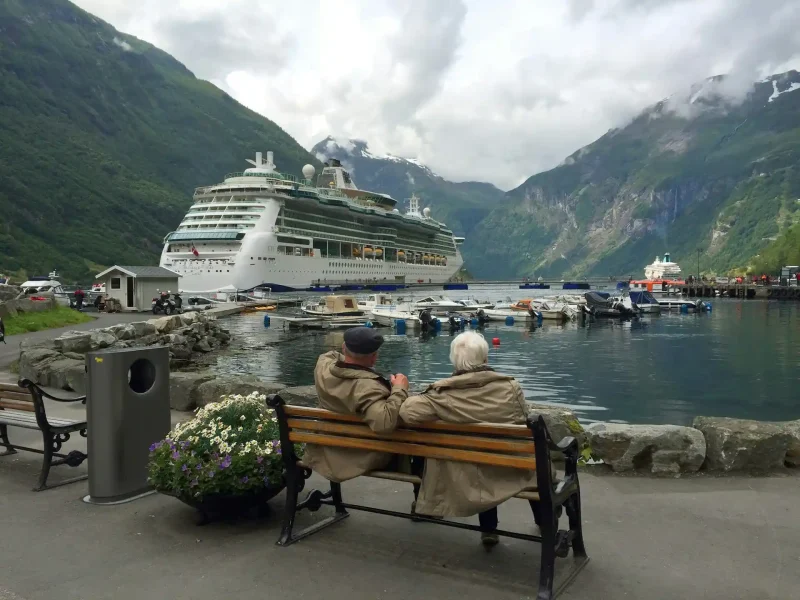
There is a particular moment that every first-time international cruise passenger describes the same way, regardless of whether they are on the deck of a ship entering Alaska’s Glacier Bay or rounding the headland toward Santorini at dawn.
They say they had no idea it would be this big.
Not the ship — the world it opens. A single seven-night cruise itinerary can drop you in five countries, let you stand at the foot of a glacier the size of Mumbai’s western suburbs, watch humpback whales breach close enough to hear them breathe, and have you back at the ship in time for dinner cooked by a Michelin-calibre kitchen. For Indian travellers who have been to Europe on a tour bus or spent a week on a Maldives beach, an international cruise represents an entirely different mode of travel — one that most of India’s upper-travel-class has been strangely slow to discover.
That is starting to change. According to the Cruise Lines International Association (CLIA) 2024 Global State of the Ocean Cruise Industry report, 31.7 million people took an ocean cruise in 2023, a figure that had already recovered to pre-pandemic levels — and Asia-Pacific was the fastest-growing source market. Indian outbound cruise numbers are growing year on year, driven largely by aspirational travellers who have maxed out standard European tours and are looking for something that genuinely cannot be replicated on a flight-and-hotel trip.
This guide covers the four cruise regions that matter most for Indian travellers — Alaska, Norway (including Northern Lights sailings), the Mediterranean, and the Caribbean — with a port-by-port look at what you actually experience, the best months for each, and the planning realities that most Indian travellers don’t hear until it’s too late to get their preferred cabin.
IMAD Travel holds direct booking relationships with every major international cruise line — Royal Caribbean, MSC, Norwegian Cruise Line, Celebrity, Holland America, Silversea, Disney Cruise Line, and others — which means access to full inventory, honest pricing, and the pre- and post-cruise land extensions that turn a great cruise into a complete journey.
The One Thing Most Indian Travellers Don't Know About Booking a Cruise
Cruise itineraries for the 2026–2027 season are already substantially sold at the time of writing. The best cabins — balcony staterooms with unobstructed views, suites, and family-connecting cabins — go earliest. The Alaska 2027 season opened for bookings in late 2025. Norwegian Fjords summer 2027 sailings are already seeing sold-out departures on certain dates.
This is the single most important planning fact for Indian travellers coming to international cruising for the first time: you cannot plan a cruise the way you plan a Dubai trip or a Maldives long weekend. The cruise industry runs 12–24 months forward. Early booking discounts of 20–35% are real; last-minute deals on the sailings Indian travellers actually want (specific dates, balcony cabins, July/August school holiday windows) are rare.
The practical implication: if you are reading this in mid-2026 and want to take an Alaska cruise in summer 2027, the time to book is now. If you want Northern Lights in February 2027, you may have 6–8 weeks before the best sailings close.
IMAD Travel’s cruise team monitors inventory for clients and can tell you exactly what is available for your preferred dates — WhatsApp +91 63003 03169 with your travel window and we’ll check live availability.
Alaska Cruise: What You Actually See, Month by Month
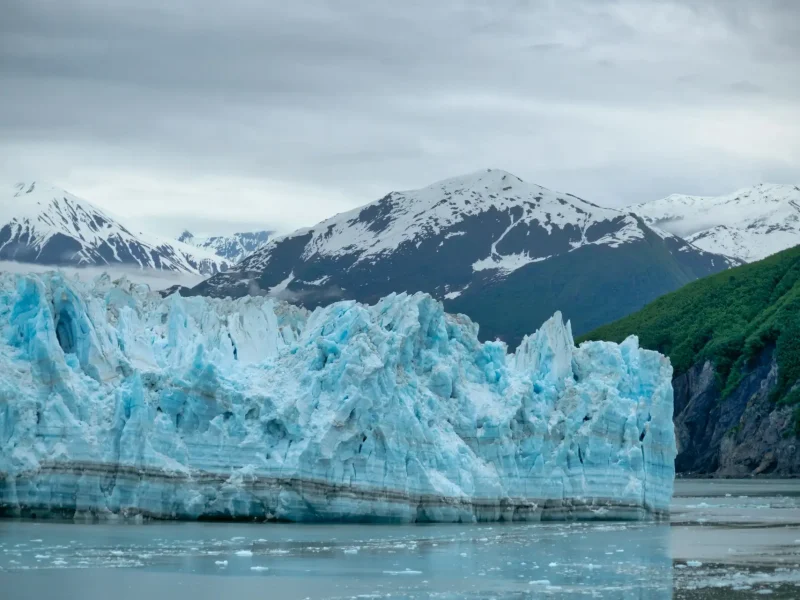
Alaska is the cruise experience that defies description until you are inside it. The numbers help set the scale: Hubbard Glacier — the most visited tidewater glacier on Alaska cruises — is 122 kilometres long and 10 kilometres wide at its face. When it calves (when chunks break off into the sea), the sound carries for miles across the bay and the resulting wave rocks ships anchored to watch from a respectful distance. This is not a photograph you are looking at. This is happening in front of you.
The Alaska cruise season runs May through September. Here is what each month gives you:
May — The earliest ships return as snow still covers the peaks. Crowds are thin, prices are among the year’s lowest, and wildlife is moving after winter. Fewer whale concentrations than peak summer, but bears are highly active as they come out of hibernation. Best for: travellers who want Alaska without peak-season ship volumes.
June — Glaciers at their most dramatic; extended daylight (18+ hours near solstice) means light from early morning to 11 PM. Humpback whales begin arriving in Frederick Sound in large numbers. Best for: first-time Alaska cruisers; the “complete” Alaska experience.
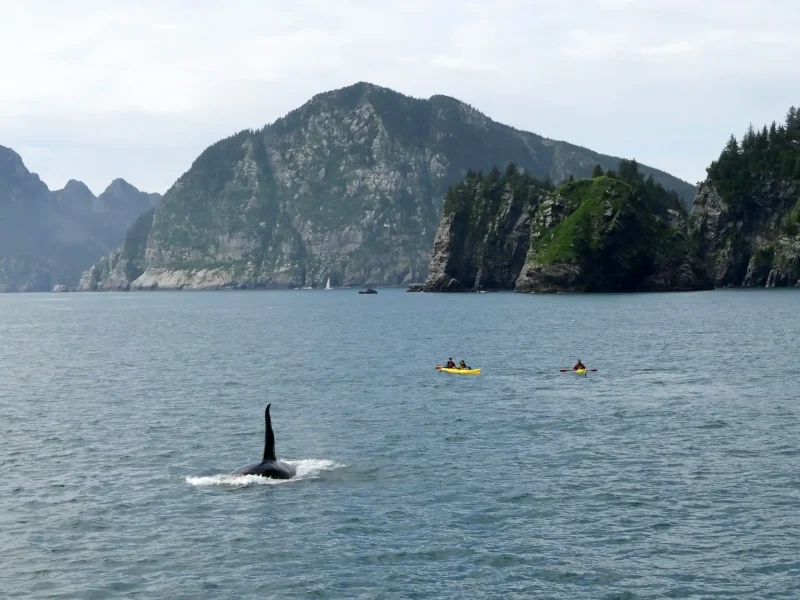
July and August — Peak season. Humpback whale concentrations in Frederick Sound (near Petersburg) reach their annual high — CLIA-affiliated naturalist guides describe this as one of the highest-density whale viewing areas on Earth during these months. Orca pods are regularly spotted in the Inside Passage. Brown bears fishing for salmon at Pack Creek on Admiralty Island and the Anan Wildlife Observatory near Wrangell are accessible by floatplane excursion from ship ports. All the ship’s wildlife experts are on deck. Best for: families, wildlife-focused travellers; maximum probability of dramatic sightings.
September — Autumn begins; foliage in the valleys turns gold and amber. Whale sightings remain strong. Ships thin out. Best for: couples; photographers; those who prefer smaller crowd environments.
Key Alaska Ports — What Happens When the Ship Docks
Juneau — Alaska’s capital city, accessible only by air or sea (no road connects it to the rest of North America). The Mendenhall Glacier is a 20-minute bus ride from the dock — you can walk to its face through a boreal forest trail. Whale-watching boats leave from the harbour. The Mount Roberts Tramway goes to 1,760 metres above sea level in under 10 minutes.
Ketchikan — The “Salmon Capital of the World.” The Creek Street boardwalk runs over a salmon-filled creek where, in late summer, you can watch sockeye salmon running upstream directly below your feet. The Misty Fjords National Monument floatplane tour from here is consistently rated among the best excursions on any cruise route on Earth.
Skagway — A preserved Gold Rush-era town from the 1890s. The White Pass & Yukon Route narrow-gauge railway climbs to 2,900 feet through mountain scenery that changes every five minutes.
Glacier Bay National Park — Not a port but a slow, narrated sail through UNESCO World Heritage wilderness. The ship reduces speed to near-stationary as rangers come aboard to narrate the glacier geology. Humpbacks surface alongside the ship. No words.
For Indian travellers: Juneau has Indian restaurant options (limited but available). On-ship dining remains the primary option; all major cruise lines accommodate vegetarian and Jain diets with advance notice — confirm when booking through IMAD Travel.
Norway Fjords Cruise: The Fjords in Summer, the Northern Lights in Winter
Norway offers two entirely distinct cruise experiences depending on when you go — and most Indian travellers don’t realise that a single country can offer two of the world’s most celebrated natural phenomena in opposite seasons.
Norway Fjords Cruise (May–September)
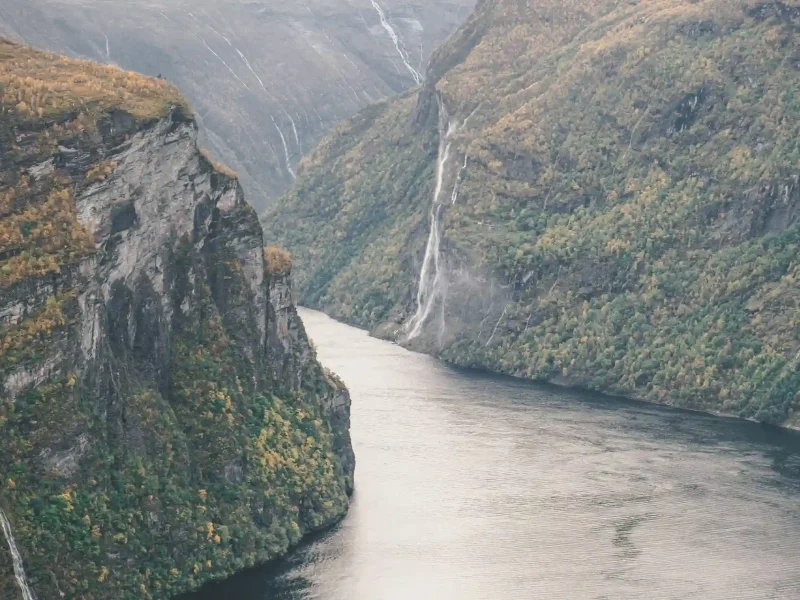
The Geirangerfjord is 15 kilometres long, 250 metres deep, and flanked by 1,400-metre cliff faces with waterfalls so high that some of them evaporate before they reach the water. It has been a UNESCO World Heritage Site since 2005. The Nærøyfjord, at its narrowest point only 250 metres wide, creates a canyon effect when a cruise ship moves through it that no photograph — including the many outstanding ones on this page — quite prepares you for.
On a fjord cruise sailing, you will typically visit:
Bergen — Norway’s second city, with a medieval wharf district (Bryggen, another UNESCO site) of brightly painted wooden warehouses. The fish market on the harbour has operated since the 1200s. The Fløibanen funicular climbs to 320 metres above the city in eight minutes for a panoramic view that frames why Bergen is considered one of Europe’s most beautiful small cities.
Flåm — A tiny village at the end of the Aurlandsfjord, departure point for the Flåm Railway — often listed among the world’s most scenic train journeys, climbing 863 metres in 20 kilometres through tunnels, past waterfalls, and across mountain plateaus. From Flåm, local boats take you into the Nærøyfjord.
Ålesund — Art Nouveau architecture on a cluster of islands connected by bridges, rebuilt after a 1904 fire and now one of Norway’s most photographed towns. The Atlantic Ocean Park here is one of Scandinavia’s largest aquariums.
Geiranger — At the end of the Geirangerfjord. The Seven Sisters waterfall (seven parallel streams falling 250 metres) is directly visible from the ship as it enters. The Eagles Road mountain drive from the village gives you a view looking back down the fjord from 620 metres up that most people describe as the single best view they have ever stood in.
Northern Lights Cruise (October–March)
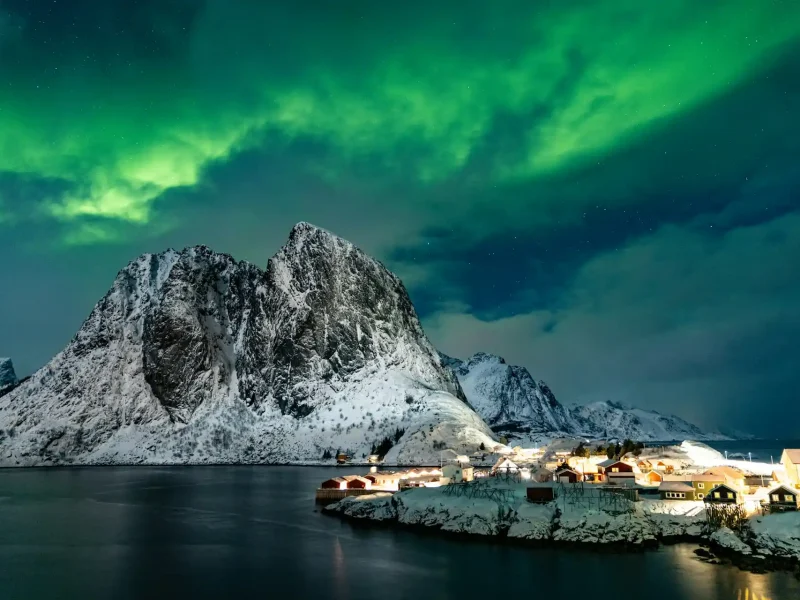
The Aurora Borealis is caused by charged particles from the sun colliding with gases in Earth’s upper atmosphere above the polar regions, producing light emissions in green, violet, pink, and white. This is not a subtle phenomenon on a good night — at maximum activity, it moves like curtains of coloured light across the entire sky, visible for hours. The best window for Indian travellers to see it is October through February, and Norway above the Arctic Circle — Tromsø, Alta, Lofoten — is among the world’s most reliable Aurora locations.
A Northern Lights cruise from Bergen or Tromsø heads above the 70th parallel into waters where the Aurora is overhead rather than on the horizon. Expedition-style cruise ships (Hurtigruten is the most respected operator for this route) run small vessels that stop in small coastal towns as well as sailing into open fjords where light pollution is zero.
What makes this a genuinely different experience from an Aurora viewing trip to Lapland: on a ship, you are moving to find the Aurora rather than waiting in a fixed location. The onboard Aurora prediction service uses meteorological data to position the ship under clear skies when conditions are right.
Realistic expectation-setting: The Aurora cannot be guaranteed. On a 7-night Northern Lights cruise, you will see it clearly on 3–5 nights in a good year (the Kp-index — a measure of geomagnetic storm intensity — determines intensity). October 2026 through March 2027 corresponds with Solar Cycle 25 peak activity, which astrophysicists predict will produce above-average Aurora intensity. This is a good window.
Practical for Indian travellers: Temperatures in northern Norway in January–February reach -15°C to -20°C on deck. Cruise ships provide Arctic-grade gear for excursions. Cabins are warm. The contrast of walking out on deck into polar cold to see the sky on fire overhead is, by all accounts, one of the most visceral travel experiences available anywhere on Earth.
Mediterranean Cruise: Fifty Ports, Infinite Mornings
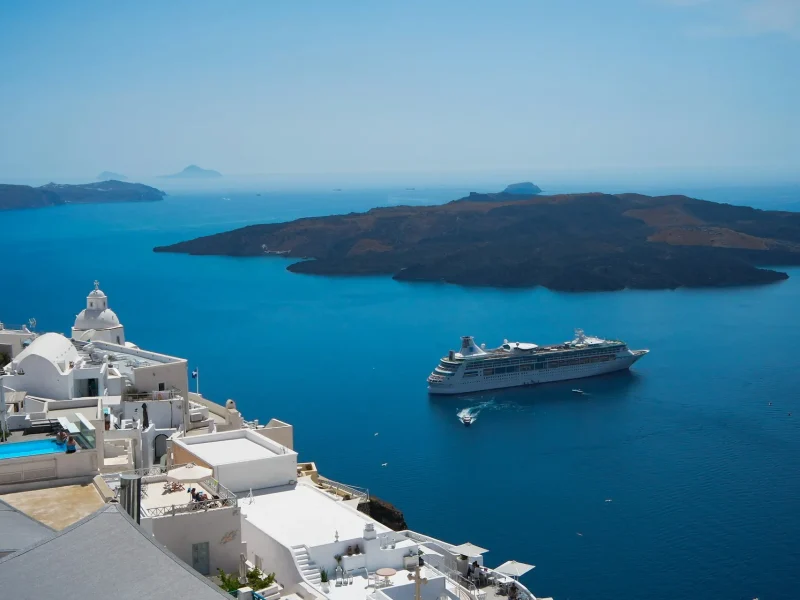
The Mediterranean cruise is the most diverse cruise experience in the world by cultural content. A single 10-night itinerary can take you from Rome to Naples to Santorini to Athens to Dubrovnik to Venice — five countries, three thousand years of history, and a different cuisine every morning. For Indian travellers who have done a 9-country Europe tour bus trip and found the pace relentless, a Mediterranean cruise solves the problem: you unpack once, and the destinations come to you.
The Mediterranean is navigable year-round, but the best months for Indian travellers are April to June and September to October — warm enough for outdoor exploration (22–28°C), without July/August peak-season crowds that make Santorini and Dubrovnik feel like Mumbai Central.
Port-by-Port: What You See When the Ship Docks
Civitavecchia (Rome gateway), Italy
Most Mediterranean cruises start or include a Rome port call. The Vatican Museums, Sistine Chapel, Colosseum, and Trevi Fountain are all within reach on a day excursion — IMAD Travel pre-books timed-entry tickets for clients so you’re not standing in a queue for 90 minutes while the ship waits. Rome also has excellent Indian restaurants for travellers who want a familiar meal mid-cruise.
Naples + Pompeii, Italy
Naples is the jump-off for Pompeii (45 minutes by circumvesuviana train), where 79 AD lava preserved an entire Roman city — streets, bakeries, bathhouses, political graffiti — under 6 metres of ash. The excavations cover 44 hectares; most cruise shore excursions cover the best-preserved district in 3–4 hours. The drive along the Amalfi Coast from here is one of the Mediterranean’s defining road experiences.
Santorini, Greece
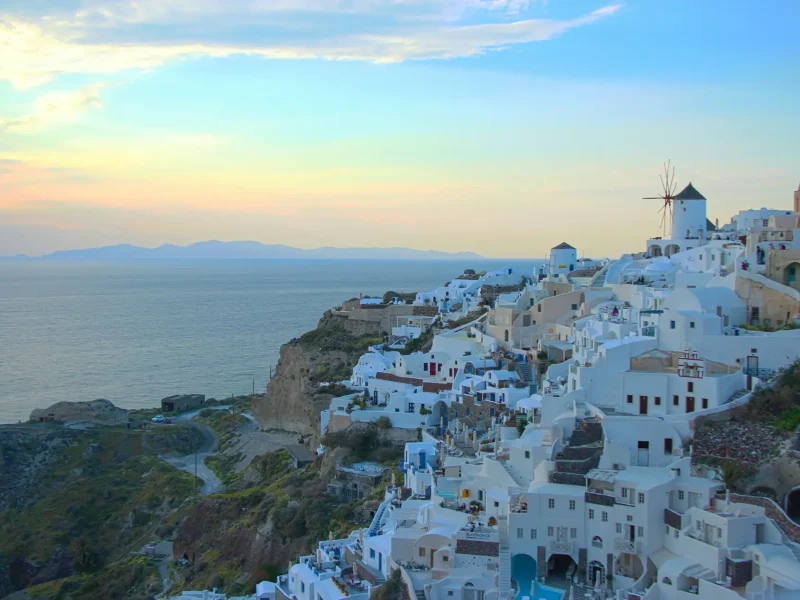
The caldera arrival is the image: sheer white cliffs rising from black volcanic water, blue-domed churches on the rim, and a ship that looks impossibly small from the village above. You tender ashore (Santorini has no cruise port — small boats shuttle you) and take the cable car or (for the particularly motivated) 580 steps up the cliff face. Oia village’s sunset is the most photographed sunset in Europe. The black sand beaches of Perissa are a 20-minute bus ride.
Athens / Piraeus, Greece
The Acropolis. No description makes it less extraordinary than arriving at it. The Parthenon is 2,500 years old and still structurally intact enough to be legible as an enormous public temple on a city-crown hilltop visible for 50 kilometres. The new Acropolis Museum at the base of the hill is one of Europe’s finest archaeological museums, opened in 2009 and purpose-built to contextualise what you see above.
Dubrovnik, Croatia
The Old City walls of Dubrovnik — 2 kilometres of limestone battlements that you walk entirely around in about 90 minutes — enclose one of Europe’s most intact medieval cities. Pedestrianised Stradun (the main street) is marble-polished by 700 years of foot traffic. The cable car above the city takes you to Mount Srđ for a view of the Adriatic that confirms why this is consistently called one of the world’s most beautiful cities.
Kotor, Montenegro
Kotor is what Dubrovnik looked like before the crowds found it. A walled Venetian-era old city at the end of a bay so deep it was initially misidentified by early explorers as a fjord. The 1,350 stone steps to the fortress above the city take 40 minutes to climb and deliver a view of the bay that is among the most striking in the Mediterranean.
Barcelona, Spain (common departure port)
If your cruise starts or ends in Barcelona, build in at least two full days. The Sagrada Família — Gaudí’s cathedral, 140 years under construction and still not complete — is unlike any other building in the world. Park Güell, the Gothic Quarter, and the Boqueria market round out a city that rewards slow walking. Barcelona has one of Europe’s best concentrations of halal and Indian restaurants.
Caribbean & Disney Cruise: Turquoise Water, Private Islands, Family Experiences
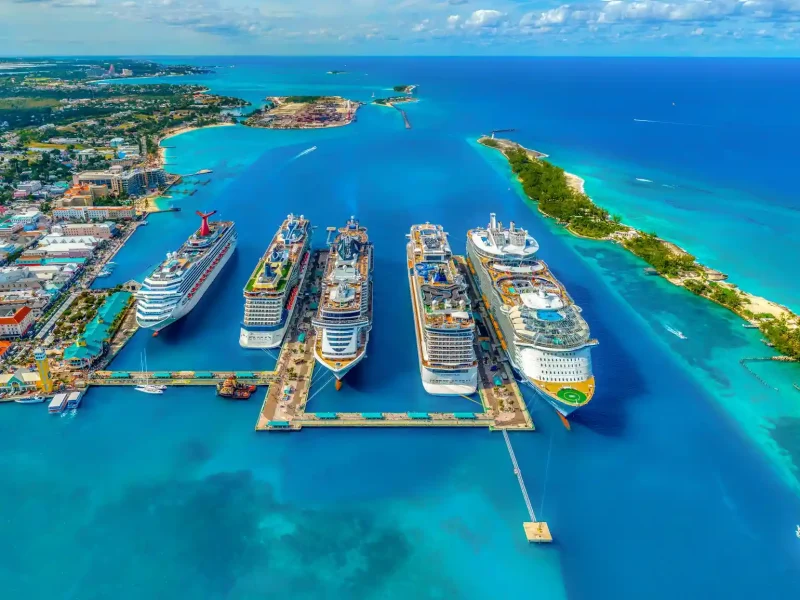
The Caribbean cruise is the most accessible international cruise experience for Indian families making their first ocean voyage — flights from India connect through Dubai or London to Miami, Fort Lauderdale, or San Juan; the climate is warm year-round; and the combination of beach days and culture ports gives families with children of all ages something meaningful at every stop.
The Caribbean cruise season runs year-round, but the ideal window for Indian travellers is December through April — outside hurricane season, with dry and warm weather across most islands.
What Indian Families Experience Port by Port
St. Maarten — Half French, half Dutch (literally divided by an unmarked border in the middle of the island), St. Maarten is among the most Indian-food-friendly Caribbean islands, with a Maho Beach famous for the aircraft that land directly over sunbathers’ heads at Princess Juliana Airport. A specific, extraordinary moment: planes coming in at 10 metres above the beach fence. Children are stunned.
Nassau, Bahamas — The clearest water in the Atlantic. Atlantis Paradise Island (a full resort complex accessible by excursion from the cruise port) has waterslides, aquariums with sharks, and one of the Caribbean’s most impressive casino-resort complexes for adults. The beach directly outside the port is walkable.
St. Lucia — The Pitons — two volcanic peaks rising directly from the sea — are among the most dramatic geographical features in the Caribbean. A catamaran sail along the west coast, stopping at the Pitons and a volcanic black sand beach, is the signature experience here.
Cozumel, Mexico — Gateway to some of the Caribbean’s best snorkelling and diving on the Mesoamerican Barrier Reef (the world’s second-longest). Non-divers visit the ruins at Tulum, a Mayan coastal city built 500 years before the first European arrived in the Americas.
CocoCay / Private Islands — Most major cruise lines own or lease a private Caribbean island (Royal Caribbean’s Perfect Day at CocoCay, MSC’s Ocean Cay Marine Reserve, Disney’s Castaway Cay and Lookout Cay). These are full-day beach experiences exclusive to ship guests — no outside visitors, no vendors, immaculate infrastructure. Families consistently rate the private island day as the cruise highlight.
Disney Cruise Line — A Special Note
Disney Cruise Line operates predominantly in the Caribbean and has recently expanded to European itineraries (Mediterranean and Norway). For families with children aged 4–14, Disney’s ships are categorically different from standard cruise lines — every evening is a Broadway-quality show, the character meet-and-greets are genuine (not rushed), the children’s clubs run 9 AM to midnight with professional supervision, and the ship’s design has been studied and optimised for families in a way that Royal Caribbean and MSC have not fully matched.
IMAD Travel has direct booking access to Disney Cruise Line — worth noting because Disney cruises frequently sell out 12–18 months ahead, and availability at Indian school holiday dates (April–May, October, December) is extremely limited. Booking through IMAD Travel gets you immediate access to available inventory with transparent pricing.
Honeymoon Cruise Options — Best Routes for Indian Couples
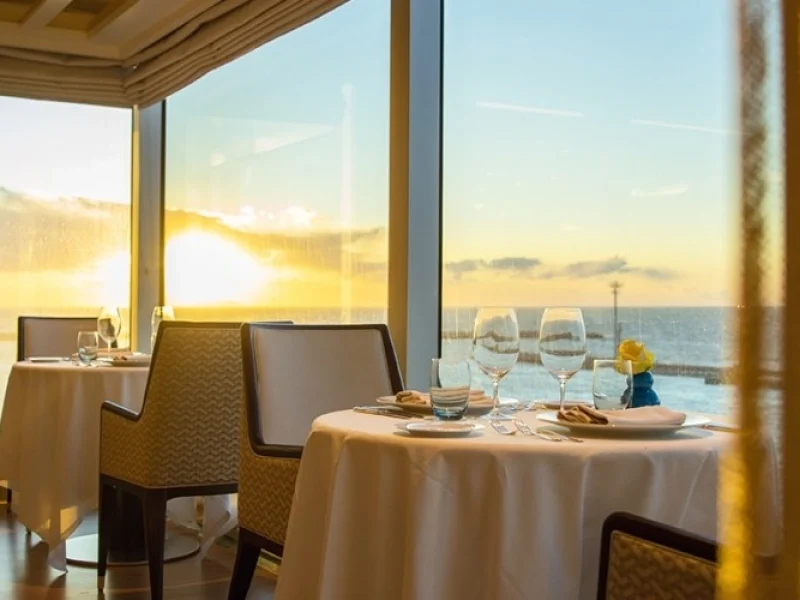
A honeymoon cruise gives Indian couples something that a standard resort honeymoon rarely does: a new backdrop every morning. You wake up in Santorini, spend the day in Dubrovnik, and watch the sun set from the ship’s deck as it moves toward Venice — all while your suite, your butler, and your dining table stay constant. For Indian couples who have been to Europe before or want more than a week in a single Maldives overwater villa, a cruise honeymoon is genuinely worth considering.
The three cruise routes that work best for Indian honeymoon couples are each different in character.
Mediterranean — Culture, Architecture, and Sunsets
The Mediterranean cruise is the most naturally romantic cruise route in the world by the weight of evidence — Santorini’s caldera at dusk, the lantern-lit streets of Dubrovnik’s old town, a private wine tour in a Tuscany vineyard during a Livorno port stop, gondolas in Venice. For couples who want beauty they can walk through rather than just look at from a beach, the Mediterranean wins. The best honeymoon window is May–June or September–October, when temperatures are warm and the Santorini and Amalfi crowds thin enough to feel intimate rather than overwhelming.
Cruise lines that do this route best for couples: Celebrity Cruises (quieter, premium food and wine focus), Silversea (ultra-luxury, smaller ships that dock closer to town), and MSC Cruises (good value, strong suite product).
Norway Fjords — Dramatic and Uncommon
For Indian couples who want a honeymoon that is distinctly different from what everyone else does, Norway is the answer. The Geirangerfjord and Nærøyfjord are among the most visually arresting landscapes on Earth, and a cruise through them in June — when the waterfalls are in full flow, daylight lasts until 11 PM, and the ship moves in near-silence through vertical cliff faces — is an experience that photographs do not prepare you for. Norwegian fjord cruises also have a practical advantage: shorter and cheaper flights from India than Alaska, through Dubai or London.
For a Northern Lights honeymoon, an October–February Norwegian expedition cruise is a specific, extraordinary experience — the Aurora on a clear night above 70°N latitude is one of those travel moments that couples consistently describe as the most singular thing they have ever seen together. See the Northern Lights section above for planning details.
Caribbean — Warm Water, Private Islands, and Relaxation
For couples whose priority is warmth, beach time, and ease rather than culture-heavy port exploration, the Caribbean remains unmatched. A 7-night Caribbean honeymoon cruise combines multiple island beaches, a private island day (cruise line–only), snorkelling or diving, and evenings that go from sunset cocktails to live music to multiple dining options — all without repacking once. The best Caribbean honeymoon window for Indian travellers is December–April.
Look at Celebrity Cruises’ Retreat suite product (a ship-within-a-ship suite experience with dedicated restaurant, lounge, and butler) or Royal Caribbean’s suite-class Sky Class for Caribbean honeymoons — these are meaningfully better than a standard balcony cabin and worth the upgrade.
Honeymoon add-ons IMAD Travel arranges on cruise bookings:
- Stateroom decoration and champagne for embarkation day (arranged with the ship ahead of sailing)
- Specialty restaurant reservations (on-ship fine dining books up before departure)
- Couples’ spa package confirmation (spa slots fill fast on sea days)
- Pre-cruise hotel night in the departure city — most couples flying from India want a full day to recover before boarding
- Post-cruise extension if you want dedicated city time (3 nights in Rome after a Mediterranean cruise, for instance)
Luxury Cruise Packages — What the Premium Experience Actually Includes
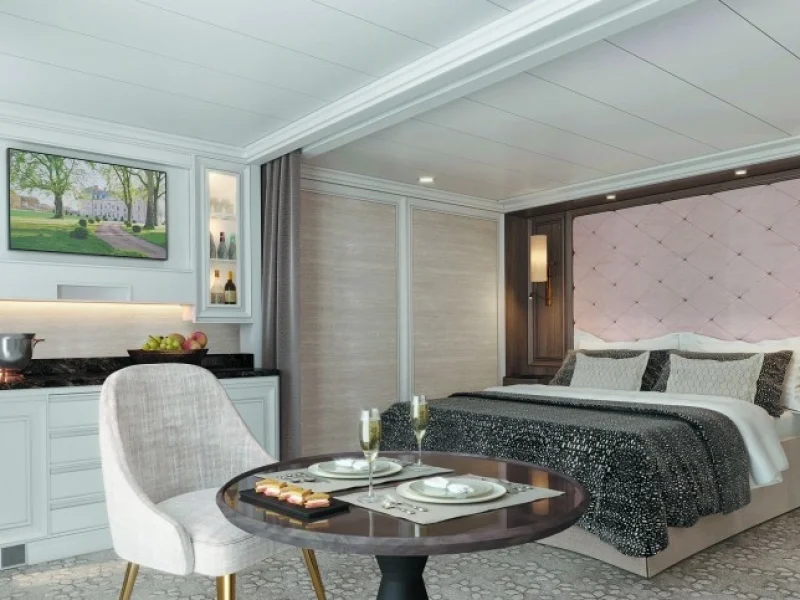
“Luxury cruise” is used loosely by the industry. A balcony cabin on a Royal Caribbean mega-ship is marketed as a luxury experience. A Silversea suite in Antarctica with a butler, included shore excursions, and a Relais & Châteaux culinary programme is also called a luxury experience. These are not the same thing.
For Indian travellers considering the premium end of cruise travel, here is a clear breakdown of what the four tiers actually deliver.
Contemporary / Mainstream Tier (Royal Caribbean, MSC, Norwegian, Costa)
Large ships, 3,000–6,000 passengers, strong entertainment infrastructure. Cabins range from inside (no window) to suite. Dining includes a main dining room and specialty restaurants (extra cost). This is excellent value and delivers a genuinely impressive ship experience, but “luxury” in the marketing sense is aspirational. Best for: families, first-time cruisers, travellers who want maximum on-ship activity.
Premium Tier (Celebrity Cruises, Holland America, Princess, P&O)
1,800–3,000 passengers, noticeably better food quality and service standard than mainstream, more curated itineraries. Celebrity’s Retreat suite class (a dedicated restaurant, lounge, and concierge service within the ship) is where the experience starts to feel genuinely premium rather than “large hotel.” Best for: couples, first-time luxury travellers, travellers who want better food and a calmer ship without expedition-level pricing.
Luxury Tier (Oceania, Azamara, Viking Ocean)
600–1,200 passengers. Oceania is particularly well regarded for food — their culinary partnership with Jacques Pépin is genuine, not promotional, and the main restaurant quality on an Oceania ship competes with a good European restaurant in a way that main-deck dining on a Royal Caribbean ship simply does not. Viking’s ships are all-inclusive (drinks, excursions, gratuities, Wi-Fi all included), which makes pricing transparent and the on-board experience notably more relaxed. Best for: food-focused travellers, couples 40+, Indian travellers who want European-style small-ship travel.
Ultra-Luxury / Expedition Tier (Silversea, Seabourn, Regent Seven Seas, Ponant)
100–700 passengers. Fully all-inclusive (alcohol, excursions, gratuities, business-class flights on some Silversea and Regent packages, laundry). Butler service in every suite. Shore excursion programmes built around access that mainstream ships cannot provide — Zodiac landings on uninhabited islands in Alaska, private museum openings in Mediterranean ports after hours, access to Glacier Bay’s inner zone that large ships cannot enter.
For Indian travellers, Silversea and Regent Seven Seas are IMAD Travel’s most frequent recommendations at the ultra-luxury tier. Both have strong track records with guests from South Asian backgrounds, offer vegetarian dietary accommodation without friction, and include excursions and drinks in the fare — making the pricing easier to compare against a mainstream cruise with paid excursions added.
What “all-inclusive” actually means (and doesn’t mean) on luxury cruises:
On Regent Seven Seas Cruises, for example, the all-inclusive package covers: all shore excursions (1 per port per day), all beverages including premium spirits and wines, specialty dining, gratuities, Wi-Fi, and on some voyages, business-class flights. What it does not cover: private custom tours (above the included group excursion), purchases ashore, and on-board spa services. IMAD Travel goes through this line by line when presenting luxury cruise options so you know exactly what your budget covers before you sail.
Best Month to Cruise Each Destination — At a Glance
| Cruise Region | Best Months | Why | Avoid |
|---|---|---|---|
| Alaska | June–August | Whale peak, maximum daylight, glacier drama | May (early season, fewer whales); Sept (weather risk) |
| Norway Fjords | May–July | Long daylight, full waterfall flow, best fjord views | Aug (crowds peak); Oct–March (fjords accessible but dark) |
| Northern Lights, Norway | Oct–Feb | Aurora peak, polar night above Arctic Circle | June–Aug (24-hr daylight = no Aurora visible) |
| Mediterranean | April–June, Sept–Oct | Warm but not overcrowded; visa simpler | July–Aug (extreme crowds, peak prices in Santorini/Dubrovnik) |
| Caribbean | Dec–April | Dry season, no hurricanes, best sea visibility | June–Nov (hurricane season; lower-tier ships deployed) |
| Disney Cruise | Dec, April | School holidays align with best Caribbean weather | August (hurricane risk on Caribbean routes) |
Plan ahead: peak months book 12–18 months in advance. Indian school holiday windows (April–May, October, December) fill fastest.
Small Ship or Mega Ship? What the Difference Actually Means for Your Experience
The choice between a small expedition ship (100–500 passengers) and a mega-ship (3,000–6,000 passengers) is the most important decision most first-time cruisers don’t know they’re making.
Mega-ships (Royal Caribbean, MSC, Norwegian Cruise Line mainstream fleet) are essentially floating resort hotels. Royal Caribbean’s Icon of the Seas, launched in 2024, carries 7,600 passengers across 20 decks and includes a waterpark, 40+ restaurants, a surf simulator, ice rink, and a neighbourhood of suite-only accommodation. For families, the on-ship entertainment and facilities are genuinely the holiday — ports are a bonus.
Mid-size premium ships (Celebrity Cruises, Holland America, Princess, Oceania) carry 1,500–3,000 passengers and prioritise itinerary and cuisine over mega-ship entertainment infrastructure. The experience is calmer, more adult-oriented, and tends to call at smaller ports that larger ships can’t access.
Small expedition ships (Silversea, Seabourn, Hurtigruten, Ponant) carry 100–700 passengers. The Alaska Inside Passage and Norwegian Fjords experience on a small ship is fundamentally different — you can approach Glacier Bay’s faces more closely, dock in Ketchikan’s old town rather than an industrial port, and access Zodiac boat excursions to land directly on glacier moraine. The per-night cost is substantially higher; the quality of experience is not comparable to a mega-ship.
IMAD Travel’s team can walk you through the right ship choice for your travel style, budget, and priority — it makes a larger difference to the experience than most travellers expect.
How IMAD Travel Handles International Cruise Bookings for Indian Travellers
Most Indian travellers who book cruises directly face four common problems that IMAD Travel’s process solves:
1. Cabin choice without context. Cruise ship deck plans are complex — the difference between an obstructed-view balcony cabin and an unobstructed one is not obvious from a website but is obvious when you’re looking at a structural pillar instead of Glacier Bay. IMAD Travel’s team has reviewed deck plans across all major ships and knows which cabins deliver on what they promise.
2. Visa gaps. A Mediterranean cruise that visits Greece, Croatia, and Montenegro requires a Schengen visa for Greece plus Croatian and Montenegrin visas — they are not interchangeable. A Caribbean cruise that includes a Mexico port visit has specific entry requirements. IMAD Travel coordinates the full visa picture before booking, not after. Schengen visa assistance →
3. Pre- and post-cruise land extensions. The cruise starts in Rome — why not spend 3 nights in Rome first? The Alaska cruise ends in Vancouver — should you add 4 days for the Canadian Rockies? IMAD Travel builds these extensions into the same booking rather than leaving you to stitch them together separately.
4. Direct access, no third-party markup surprises. IMAD Travel holds direct trade accounts with Royal Caribbean, MSC, Norwegian, Celebrity, Holland America, Silversea, and Disney. This means accurate pricing, priority access to cabin holds, and clear communication on what is included (and what is not — gratuities, shore excursions, and specialty dining are typically extra, and we tell you that upfront).
Frequently Asked Questions — International Cruises for Indian Travellers
How far in advance should Indians book an international cruise?
For Alaska (June–August), Norway Fjords (June–July), and Caribbean school-holiday sailings (December, April–May), book 12–18 months ahead to secure the cabin category you want at early-bird pricing. Mediterranean shoulder-season sailings (April–May, September–October) can often be booked 6–9 months ahead. Northern Lights expedition cruises (October–February) book 9–12 months ahead — they have smaller ships and limited capacity.
Do Indian vegetarians and Jain travellers have food options on international cruises?
Yes, reliably so on all major cruise lines if arranged in advance. Royal Caribbean, MSC, Norwegian, and Celebrity all have formal processes for vegetarian, vegan, and Jain meal requests. Advise your dietary requirements at booking (IMAD Travel handles this) and confirm again at embarkation. On-ship Indian restaurant options exist on some MSC and Norwegian ships; on others, the main dining room’s vegetarian menu is the primary option — which on premium lines is genuinely good.
What visas do Indian passport holders need for an international cruise?
It depends on the ports. Alaska cruises from Seattle or Vancouver require a US or Canadian visa (depending on departure port) — plan 3–4 months ahead for US visa. Mediterranean cruises typically require a Schengen visa for Greece/Croatia/Italy ports, plus a British visa if calling at Gibraltar. Caribbean cruises from Miami or Fort Lauderdale require a US visa. IMAD Travel handles the complete visa picture when booking.
Is an international cruise safe for seniors or travellers with mobility challenges?
Major cruise lines are among the most accessibility-conscious travel formats available. Medical centres are on board all ships. Mobility aids are accommodated; accessible cabins with roll-in showers and wider doorways must be requested at booking. Shore excursions vary — Alaska excursions can involve uneven terrain; Mediterranean and Caribbean ports often have accessible options available. Tell IMAD Travel when booking and we’ll flag accessibility at every step.
Why is a cruise better than booking a Europe tour bus trip for the same destinations?
The cruise solves the two biggest frustrations of European multi-country tours: unpacking every 1–2 nights, and transit time that eats into days. On a cruise, your cabin is your constant base — your luggage doesn’t move. Transit between cities happens overnight while you sleep. You arrive in Santorini rested at dawn, spend the day exploring, and board the ship again in the evening. The trade-off: you have less time in each port than a dedicated city stay. For first-time visitors who want breadth, this is the right format.
Can I board a cruise in India, or do I need to fly to the departure port?
Most major Alaska, Norway, Mediterranean, and Caribbean cruises depart from international ports — Seattle/Vancouver for Alaska, Bergen/Southampton for Norway, Rome/Barcelona/Athens for Mediterranean, Miami/Fort Lauderdale/San Juan for Caribbean. IMAD Travel includes the international flights as part of the complete package, with connections through Dubai (Emirates), London (British Airways), or European hubs depending on routing. World cruises and some Asia-Pacific itineraries do call at Mumbai or Kochi — ask IMAD if an India-boarding option is relevant to you.
Plan Your International Cruise with IMAD Travel
IMAD Travel has direct booking access to every major international cruise line — from Alaska to the Caribbean, from Norwegian fjords to Disney sailings. We handle cabin selection, visa coordination, pre- and post-cruise land extensions, and on-board dietary requirements from a single point of contact.
Cruise planning works best when it starts early. Tell us your preferred travel window, the experience you’re looking for (wildlife, culture, Northern Lights, family entertainment), and your cabin preference — we’ll check live availability across cruise lines and send you a curated shortlist within 24 hours.
WhatsApp: +91 63003 03169
See all international cruise packages →
Written by the IMAD Travel editorial team. IMAD Travel Pvt Ltd is an IATA-accredited travel agency based in Banjara Hills, Hyderabad. We have been arranging international cruise bookings for Indian travellers since 2011, with direct trade access to all major cruise lines.
Last updated: June 2026